

The concept that “everything is created in pairs” is a profound idea that has resonated across cultures, philosophies, and scientific disciplines for millennia. It suggests a fundamental duality inherent in the fabric of existence, where phenomena, concepts, and even matter itself often manifest in complementary opposites. This article will explore the multifaceted nature of this principle, drawing upon philosophical insights, religious texts, scientific observations, and psychological theories to illuminate how pairing shapes our understanding of the universe and our place within it.
Scientific Parallels and Manifestations
Modern science, despite its empirical focus, consistently uncovers dualistic principles at various levels of reality.
- Physics:
- Matter and Antimatter: For every type of particle of matter, there exists a corresponding antiparticle with the same mass but opposite charge and other quantum numbers. When a particle and its antiparticle meet, they annihilate each other, converting their mass into energy. This fundamental pairing is a cornerstone of particle physics.
- Wave-Particle Duality: Quantum mechanics reveals that particles like electrons and photons exhibit both wave-like and particle-like properties, depending on how they are observed. This duality challenges classical intuition but is essential for understanding the quantum world.
- Positive and Negative Charges: The very foundation of electromagnetism rests on the existence of positive and negative electric charges, which attract and repel each other, giving rise to all electromagnetic phenomena.
- North and South Poles: Magnets inherently possess two poles, North and South. It’s impossible to isolate a single magnetic pole; they always appear in pairs.
- Biology:
- Sexual Reproduction: The vast majority of complex life forms reproduce sexually, requiring the genetic contribution of two parents (male and female) to create offspring. This pairing ensures genetic diversity and adaptability.
- Paired Organs: Humans and many animals possess numerous paired organs: two eyes, two ears, two lungs, two kidneys, two hemispheres of the brain. This redundancy often provides backup and enhances function.
- Symbiosis: Many ecological relationships involve symbiotic pairs, where two different species live in close association, often to their mutual benefit (e.g., cleaner fish and larger marine animals, mycorrhizal fungi and plants).
- DNA Strands: The very structure of DNA, the blueprint of life, is a double helix composed of two complementary strands wound around each other, with specific base pairs (Adenine-Thymine, Guanine-Cytosine) forming the rungs of the ladder.
- Chemistry:
- Acids and Bases: Chemical reactions often involve acids and bases, which are defined by their ability to donate or accept protons, respectively. Their interaction leads to neutralization.
- Oxidation and Reduction: Redox reactions always occur in pairs; one substance is oxidized (loses electrons) while another is reduced (gains electrons).
- Astronomy:
- Binary Star Systems: A significant percentage of stars in our galaxy are not solitary like our Sun but exist in binary systems, where two stars orbit a common center of mass.
- Galaxies and Voids: The large-scale structure of the universe shows galaxies clustered together, separated by vast cosmic voids, creating a paired structure of presence and absence.
Psychological and Social Dimensions
The principle of pairing extends deeply into human psychology and social structures.
- Conscious and Unconscious: Carl Jung’s analytical psychology, for instance, heavily emphasizes the interplay between the conscious ego and the vast unconscious, including the personal and collective unconscious. Dreams, archetypes, and shadow aspects represent these hidden psychological pairs.
- Introversion and Extraversion: These fundamental personality traits, also popularized by Jung, describe two opposite ways individuals gain energy and interact with the world, forming a spectrum of human behavior.
- Love and Hate: These powerful emotions are often seen as two sides of the same coin, deeply intertwined in human relationships.
- Joy and Sorrow: Life’s experiences inevitably bring both moments of profound joy and periods of deep sorrow, creating a natural rhythm of emotional experience.
- Individual and Society: Humans are inherently social beings, existing as individuals within the larger context of society. This pairing creates a dynamic tension between personal autonomy and collective responsibility.
- Order and Chaos: From personal routines to societal governance, humans constantly strive to create order in the face of potential chaos, a perpetual pairing that shapes our civilizations.
The Implications of Duality
The pervasive nature of “everything is created in pairs” carries several profound implications:
- Balance and Harmony: Duality suggests that opposites are not meant to eradicate each other but to exist in a state of dynamic balance. The absence of one diminishes the other; light cannot be fully appreciated without darkness, nor joy without sorrow.
- Interdependence: Pairs are often interdependent. One cannot fully define or understand one element without reference to its complementary opposite.
- Growth and Change: The interaction of opposing forces is frequently the catalyst for change, growth, and evolution. The tension between pairs drives development, whether in philosophical thought, scientific discovery, or personal transformation.
- Completeness: The universe, in its dualistic manifestations, presents a picture of completeness. It is through the combination and interplay of these pairs that reality achieves its richness and complexity.
- Understanding Complexity: Recognizing duality provides a powerful framework for understanding complex systems. By identifying the paired components or forces, we can better analyze their interactions and predict outcomes.
Conclusion
From the grand narratives of creation to the subatomic dance of particles, the principle that “everything is created in pairs” offers a unifying lens through which to view existence. It is not merely a philosophical abstraction but an observable pattern that manifests in religious doctrines, scientific laws, and the intricacies of human experience. This pervasive duality speaks to a universe built on complementary relationships, where balance, interdependence, and dynamic interaction are the fundamental drivers of reality. Understanding this principle enriches our appreciation for the intricate tapestry of life and encourages us to seek harmony in the interplay of apparent opposites.
Quran Chapter 51, Verse 49 already mentioned about this. ““And of everything We have created pairs, that you may remember.”
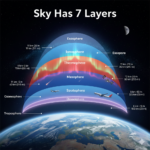
Read also Sky has seven layers.
Footnotes and Links:
-
- Stanford Encyclopedia of Philosophy: Advaita Vedanta https://plato.stanford.edu/entries/advaita-vedanta/
- Encyclopædia Britannica: Dvaita https://www.britannica.com/topic/Dvaita
- Matter and Antimatter:
- Wave-Particle Duality:
- HyperPhysics (Georgia State University): Wave-Particle Duality http://hyperphysics.phy-astr.gsu.edu/hbase/modrn.html
- Richard Feynman, QED: The Strange Theory of Light and Matter.
- DNA Structure:
- National Human Genome Research Institute: Deoxyribonucleic Acid (DNA) https://www.genome.gov/genetics-glossary/Deoxyribonucleic-Acid
- James D. Watson, The Double Helix.
- Binary Star Systems:
- NASA: Binary Star Systems https://www.nasa.gov/audience/forstudents/5-8/features/F_Binary_Stars.html
- Carl Jung (Conscious/Unconscious, Introversion/Extraversion):
- C.G. Jung, Psychological Types.
- Encyclopædia Britannica: Carl Jung https://www.britannica.com/biography/Carl-Jung