
This article explores the relationship between the 14-century-old Quranic text and the modern forensic understanding of fingerprints, supported by scientific research.
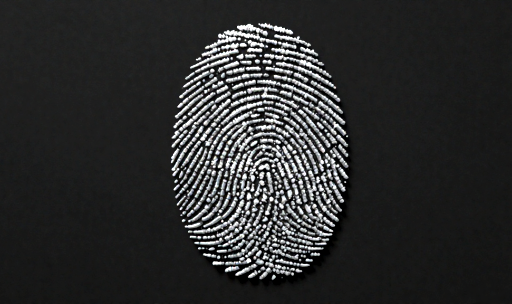
The human fingertip, once considered a simple tactile tool, is now recognized as the ultimate biological “signature.” While modern science only codified the uniqueness and persistence of fingerprints in the late 19th century, the Quran highlighted this specific body part 1,400 years ago as a primary evidence of individual identity.
1. The Quranic Context: Surah Al-Qiyamah
In the 7th century, skeptics questioned how a human could be physically resurrected after their bones had turned to dust. The Quran answered with a specific anatomical challenge:
“Does man think that We will not assemble his bones? Yes. [We are] Able [even] to proportion his fingertips.” > — Quran 75:3-4
At the time, “fingertips” (banan) were seen as delicate but not necessarily unique. However, modern scholars and researchers now argue that this verse draws attention to a feature whose complexity was only recently understood (Yoon & Jain, 2015).
2. Uniqueness and the Probability of Repetition
For over a century, the uniqueness of fingerprints has been the foundation of criminal justice. Scientific models estimate the probability of two random people sharing the same fingerprint to be as low as 1 in 64 billion (Polson, 1950).
Recent longitudinal studies have further confirmed that while image quality may degrade as a person ages, the actual ridge patterns remain persistent and unchanged throughout a human life (Yoon & Jain, 2015). This “permanence” allows fingerprints to serve as an infallible biometric key, echoing the Quranic theme of precise “proportioning” or reconstruction (Martins et al., 2024).
3. Embryogenesis: Formation in the Womb
Science has revealed that fingerprints are formed during a critical window of fetal development. Friction ridges begin to emerge at approximately 10.5 weeks of gestation and are fully set by the end of the second trimester (Martins et al., 2024).
This formation is influenced by a complex interplay of genetics and the intrauterine environment—such as the pressure of amniotic fluid—ensuring that even identical twins have different prints. This developmental complexity supports the idea that the fingertip is a “complex adaptive system” that serves as a unique identifier from birth until death (Taduran et al., 2018).
4. Historical Discovery vs. Revelation
While ancient cultures used thumbprints on clay seals, the formal scientific recognition of fingerprints as unique identifiers is a modern discovery:
- 1880: Dr. Henry Faulds first proposed using fingerprints for criminal identification (Polson, 1950).
- 1892: Sir Francis Galton published the first statistical proof of fingerprint uniqueness.
- 1897: The first fingerprint bureau was established in India, eventually replacing older, less accurate measurement systems.
The fact that the Quran highlighted the “fingertips” as the pinnacle of divine reconstruction—rather than more “obvious” organs like the heart or brain—aligns with the modern reality that our identity is literally written on our hands.
Read other article : Mountain as Pegs of earth
References
Martins, N., Silva, J. S., & Bernardino, A. (2024). Fingerprint recognition in forensic scenarios. Sensors, 24(2), 664. https://doi.org/10.3390/s24020664
Polson, C. J. (1950). Finger prints and finger printing: An historical study. Journal of Criminal Law and Criminology, 41(4), 495–517. https://doi.org/10.2307/1137996
Taduran, R. J. O., Ranjitkar, S., Hughes, T., Townsend, G., & Brook, A. H. (2018). Two complex adaptive systems in human development: Further studies of dental and fingerprint parameters. International Journal of Design & Nature and Ecodynamics, 13(1), 93–100. https://doi.org/10.2495/dne-v13-n1-93-100
Yoon, S., & Jain, A. K. (2015). Longitudinal study of fingerprint recognition. Proceedings of the National Academy of Sciences, 112(28), 8555–8560. https://doi.org/10.1073/pnas.1410272112