

The Anatomical and Physiological Triad: An Analysis of the “Three Layers of Darkness” in Human Embryogenesis
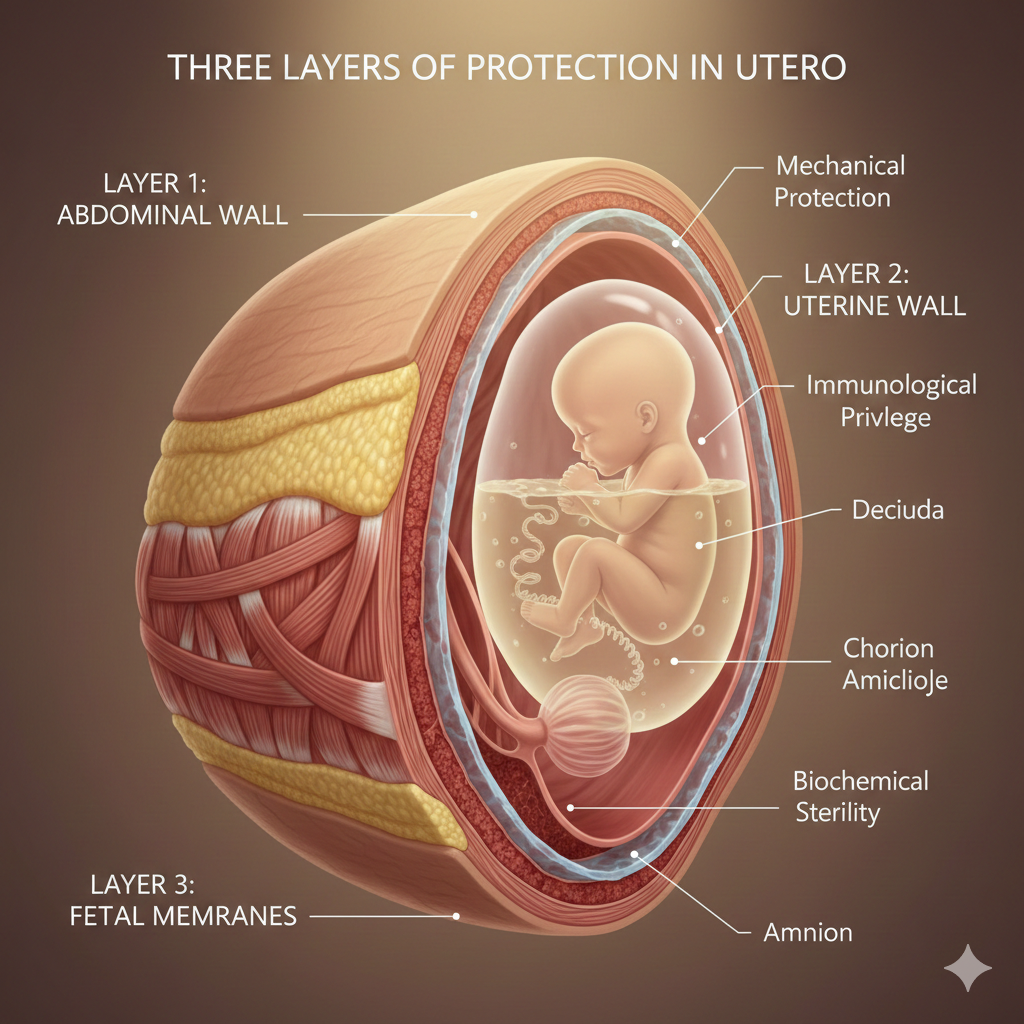
The development of the human embryo is a process shielded from the external environment by a series of biological barriers. In both historical and scientific contexts, these barriers are often referred to as the “three layers of darkness.” Anatomically, these correspond to the maternal abdominal wall, the uterine wall, and the fetal membranes. This configuration provides a sterile, thermally regulated, and immunologically privileged sanctuary essential for successful gestation.
I. The First Layer: The Maternal Abdominal Wall
The outermost barrier is the abdominal wall (parietes abdominis). This is a multi-layered structure consisting of skin, subcutaneous fat (fascia), and skeletal muscle.
Anatomical Composition
The wall is composed of several distinct strata:
- The Integument: The skin serves as the primary barrier against pathogens and UV radiation.
- Camper’s and Scarpa’s Fascia: These fatty layers provide critical thermal insulation.
- The Musculature: Comprising the rectus abdominis and the oblique muscles, which provide the structural tension necessary to support the expanding gravid uterus [^1].
Functional Significance
The abdominal wall acts as a mechanical “shock absorber.” Research indicates that the thickness of the maternal abdominal subcutaneous fat can influence the transmission of external sound and light to the fetus, effectively maintaining a low-stimulus environment [^2].
II. The Second Layer: The Uterine Wall
The uterus is the primary gestational organ. During pregnancy, it undergoes significant physiological remodeling to accommodate the growing conceptus.
The Myometrium and Endometrium
The uterine barrier consists of:
- The Myometrium: A thick layer of smooth muscle that provides a rigid physical defense.
- The Decidua: The specialized transition layer formed from the endometrium. This layer is crucial for “immunological darkness.”
Immunological Privilege
The uterine wall is the site of a complex “immunological truce.” The maternal immune system must be suppressed locally to prevent the rejection of the fetus (which carries paternal antigens). This “darkness” refers to the fetus being “hidden” from the maternal T-cells [^3].
III. The Third Layer: The Fetal Membranes
The innermost layer is the amniochorionic membrane, which directly encloses the embryo and the amniotic fluid.
Chorion and Amnion
- The Chorion: The outer fetal membrane that contributes to the formation of the placenta. It acts as a selective filter for nutrients and waste.
- The Amnion: A thin, tough, internal membrane. It holds the amniotic fluid, which provides a “weightless” environment, preventing the embryo from adhering to surrounding tissues and allowing for symmetrical growth [^4].
Biochemical Protection
The amniotic fluid within this third layer contains antimicrobial peptides (such as defensins) that protect the embryo from any bacteria that might ascend the birth canal, ensuring the “darkness” remains sterile [^5].
IV. Synthesis of the Triple Barrier System
The synergy of these three layers creates a unique microenvironment. While “darkness” is often interpreted as the absence of visible light, in embryology, it represents a state of homeostasis where the embryo is protected from:
- Mechanical Stress: Dispersed by the abdominal muscles and amniotic fluid.
- Thermal Instability: Regulated by maternal core temperature and fatty tissue.
- Biological Hostility: Managed by the decidual-placental interface.
| Layer | Component | 1st Trimester Thickness | 3rd Trimester Thickness | Primary Biological “Shield” |
| Layer 1: Abdominal Wall | Epidermis, Fascia, & Muscle | 3.0 – 5.0 cm (approx.) | 1.5 – 3.0 cm (thins as it stretches) | Thermal & Mechanical: Blocks external light and provides shock absorption. |
| Layer 2: Uterine Wall | Myometrium & Decidua | 2.5 – 3.0 cm (thick/muscular) | 0.5 – 1.0 cm (stretched thin) | Immunological: Prevents maternal T-cell recognition of fetal antigens. |
| Layer 3: Fetal Membranes | Amnion & Chorion | 0.02 – 0.05 cm | 0.1 – 0.2 cm (increases in tensile strength) | Chemical: Sterile fluid barrier preventing bacterial colonization. |
Interesting Fact
This three layers of darkness fact is already mentioned by Quran 13 centuries ago. Read Quran Chapter 39. Verse 6. Translation : “”…He creates you in the wombs of your mothers, creation after creation, in three layers of darkness.”
V. Footnotes and Authoritative Sources
[^1]:
Moore, K. L., Persaud, T. V. N., & Torchia, M. G. (2018). The Developing Human: Clinically Oriented Embryology. This text provides the definitive anatomical breakdown of maternal-fetal structures. Link to resource
[^2]:
National Center for Biotechnology Information (NCBI). Anatomy, Abdomen and Pelvis, Anterolateral Abdominal Wall. A comprehensive review of the layers protecting the internal organs. Access via StatPearls
[^3]:
Moffett, A., & Loke, C. (2006). Immunology of placentation. This study explores how the uterine wall hides the fetus from the maternal immune system. Published in Nature Reviews Immunology
[^4]:
Cleveland Clinic. Amniotic Sac: Location, Purpose & Function. A clinical overview of the innermost protective layer. View Article
[^5]:
Kim, S. S., et al. (2002). Antimicrobial polypeptides of human amniotic fluid. This research details the chemical protection provided within the third layer of darkness. Access via American Journal of Obstetrics & Gynecology
Read also The composition of Dust soil and Human body
Read also Every creatures created from water